Walnut Canyon National Monument
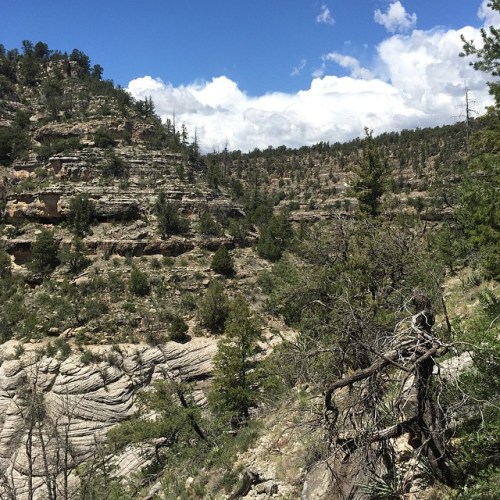
Just outside of Flagstaff is Walnut Canyon National Monument. From 1100 to 1250 the Sinagua – a pre-Columbian cultural group, lived in cliff dwellings which litter these canyon walls. via Instagram
May 3
Jan 3
Last week Kelly’s mom and her husband offered Kelly and me various suggestions in and around the Sedona area – places we might want to explore while we are here. One such place was Jerome … which they described as a former mining encampment that has reinvented itself into a neat little town with interesting shops.
To be honest, base upon that description I wasn’t quite sold on the idea. Nonetheless, Kelly did a bit more internet research of her own and she was intrigued. Since the town is only about 20 minutes drive from our campground, we decided it was worth further exploration and ventured off to see things with our own eyes … and Wednesday, Lilly tagged along and the three of us spent a few hours wandering the town.
This place is awesome. We loved it.

Jerome, viewed from below
To fully appreciate why this town is such a gem, a bit of history is in order…
Jerome’s modern history began in 1876 when three lone prospectors staked claims on what proved to be crazy-rich copper deposits. Fairly quickly word spread and soon thereafter every Tom, Dick, & Harry arrived onto the scene, desperately seeking and dreaming of their own rags-to-riches turnaround.
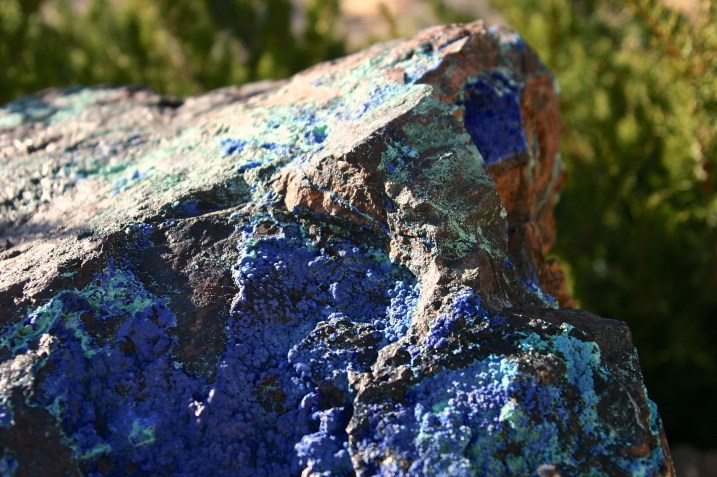
Minerals at the heart of the boom
In 1883 the first legitimate mining corporation was formed. Well funded, the United Verde Copper Company bought Jerome into the big leagues of the US mining scene. With this growth, Jerome experienced a swell in population, wealth, and debauchery … along with devastating amounts of destruction due to rampant fires.
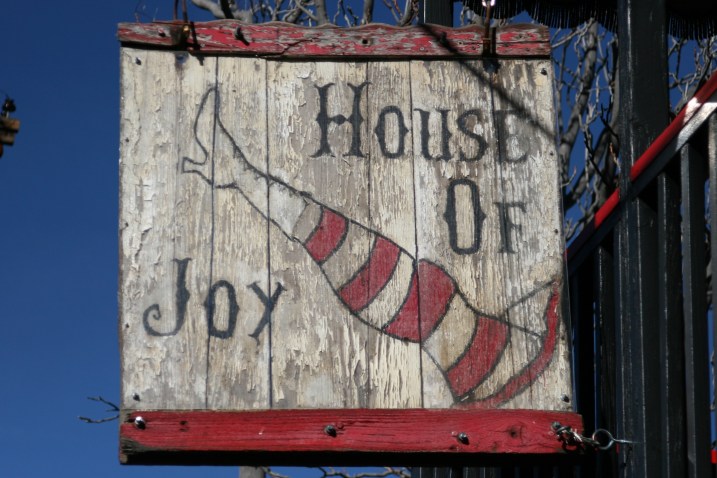
Wandering Jerome’s former red light district
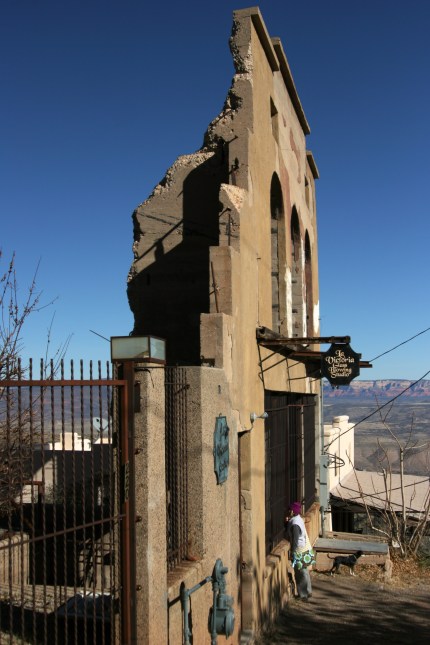
An old facade
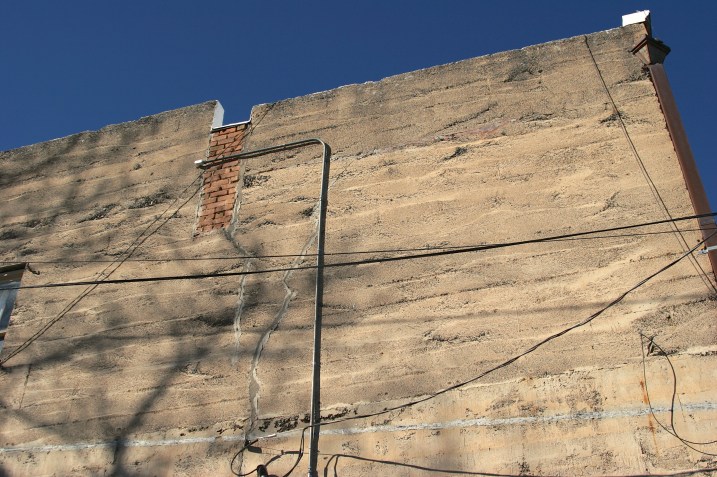
Cracks in a building
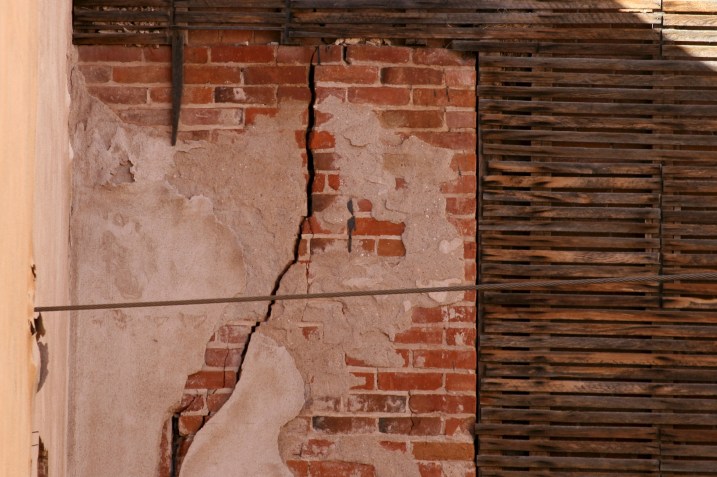
An exposed basement wall
Ever the survivor, Jerome would not surrender – its mines easily surfacing vast quantities of money with which to rebuild itself. Finally, in 1912, an East Coast fat-cat named James S. Douglas brought real “east coast money” to the scene and essentially bought-out the town’s mining claims. With deep pockets and a first-rate rolodex, Douglas secured other investors and infused serious cash and infrastructure into his operation (which he renamed Little Daisy Mine) and scaled the situation to the tune of nearly $1 billion (yes, billion) in revenue during his reign as the “Copper King”. Pack burros, mules-drawn freight wagons and horses were replaced by steam engines, autos and trucks … all of which grew mining capacities, expanding beyond copper, to unearth additional gold, silver, lead, zinc, azurite, and malachite deposits.
Douglas’s mines literally printed money. He and his investors were swimming in riches.
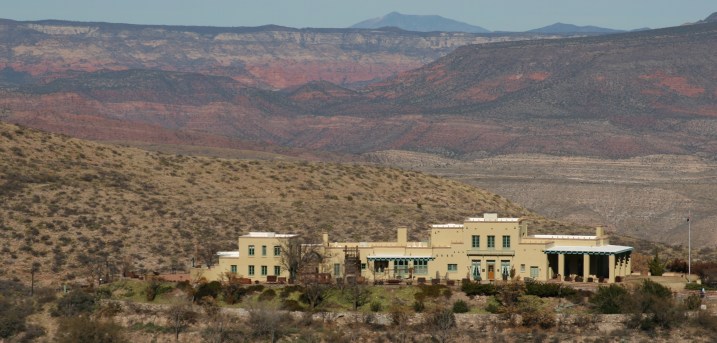
The Douglas mansion
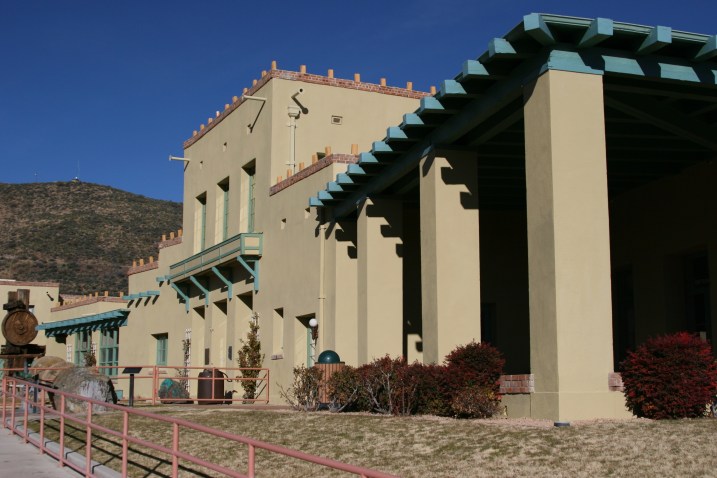
The mansion, now part of Arizona’s state park system
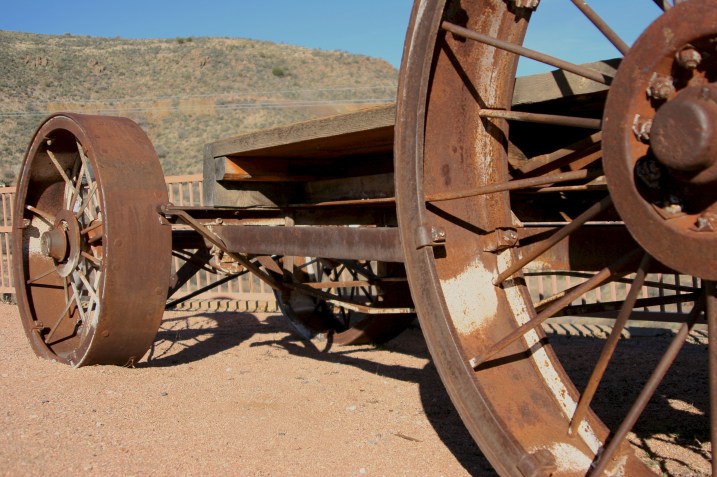
Heavy industrial equipment replaced the mule drawn carts
As Jerome’s mining output was exploding by orders of magnitude, so to did the population. By the late 1920’s, over 15,000 people – across 20 nationalities – resided in the mining camp. Not surprisingly, as the population swelled, so to did the cosmopolitan day-to-day life … and wealth and debauchery … and the fires.
Eventually local leaders saw fit to hire a police force and also bring religion into the mix. In the end, nothing really changed. Despite the addition of many churches and jail cells, the bootlegging, saloons, and prostitutes continued to flourish. Keep in mind all of this was happening literally on the side of a 30-degree mountain.

Inside the tiny Catholic church
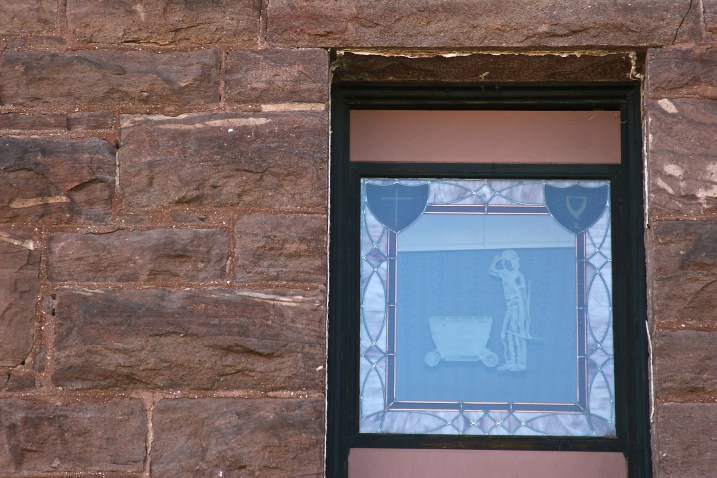
Church stain glass window
Eventually, the great depression and its suffocating grasp slowed the wheels of commerce and the once almighty Jerome fell onto very hard times. The “Copper King” was dealt a crushing blow. The boom became bust.
From what I can tell, the town sputtered for decades. As the population dipped below 100 residents, and on the cusp of drowning, Jerome was thrown a life buoy…
Similar to many places across the country, the 60’s brought artists, hippies, and others of the “counter-culture” movement to Jerome. Quickly, they settled and began selling their artisan wares. These initially unwelcome long-haired undesirables attracted buyers … and as the saying goes – the rest is history.
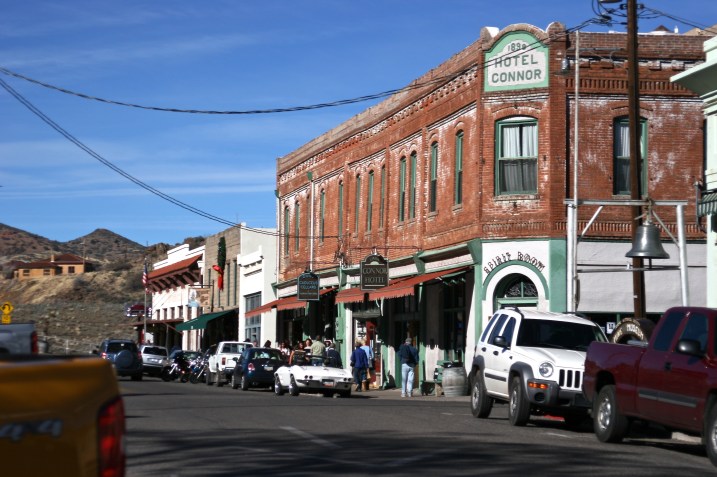
The longstanding Connor Hotel
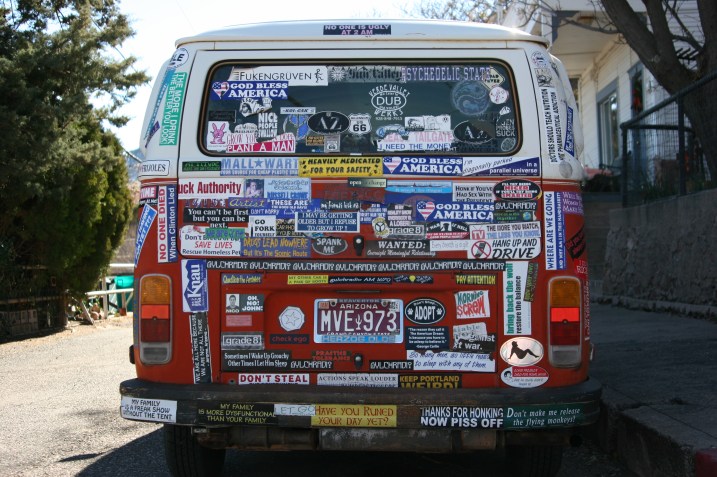
Hippies …
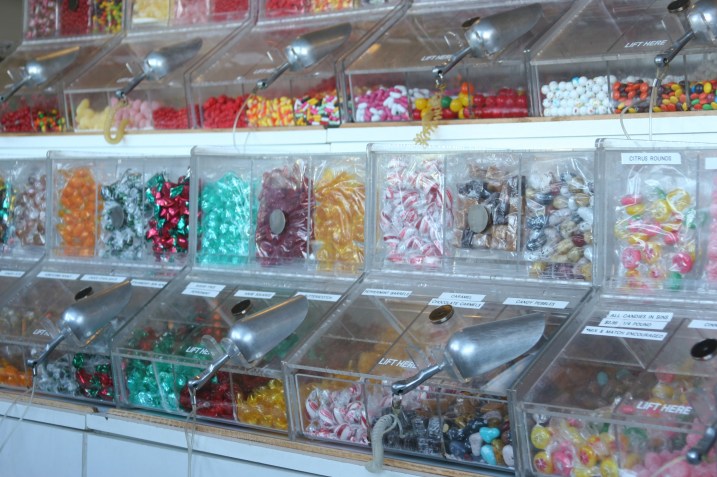
Jerome candy shop

Wandering about
Today, Jerome is afforded protection as a National Historic Monument, but mainly is a tourist town and affords people with excess cash a nice place to have their second home.
It’s also one bad-ass place, steeped in rich history.
Wandering the streets, remnants of destruction are everywhere. Everything is old, but interlaced with new … a workers dormitory has been converted into a private residence, Madelena’s House (ie- brothel) is now an artist gallery, the Senate Saloon is now a fashion salon, the mining company hospital is now a hotel. The list of old-to-new transformation throughout Jerome is endless. 45-years of richly colorful history affords this place all the ingredients of a must see location. Given the vast network of mining tunnels (nearly 90 miles in total) directly beneath, it’s amazing that the town hasn’t collapsed upon itself.
Get there before it does. **
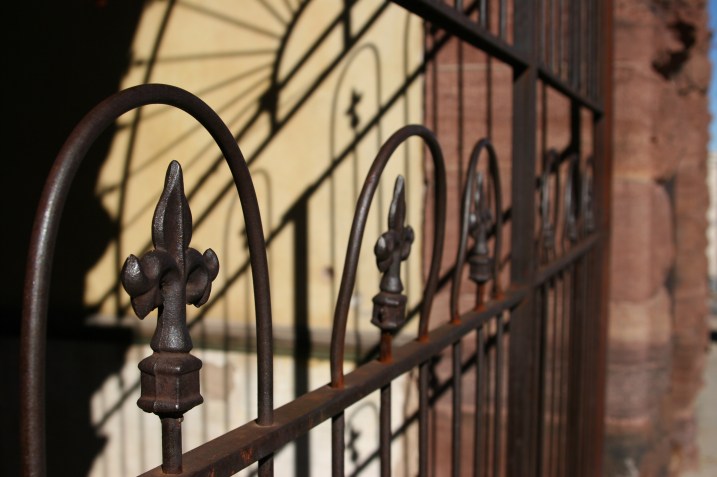
Gates no longer have a building
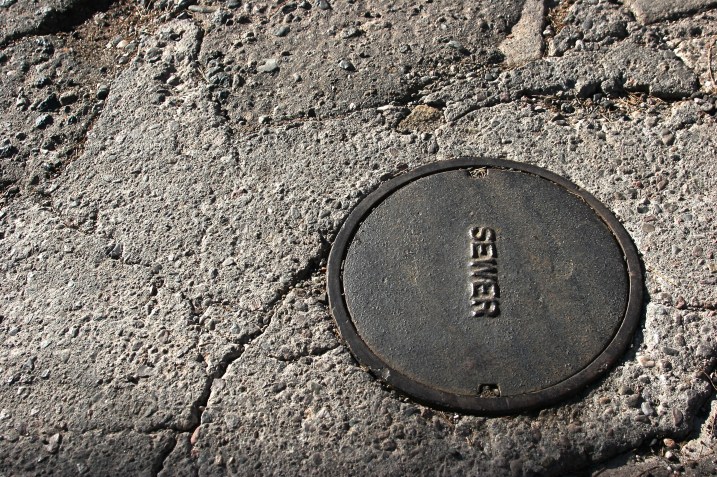
Original sewer drain access
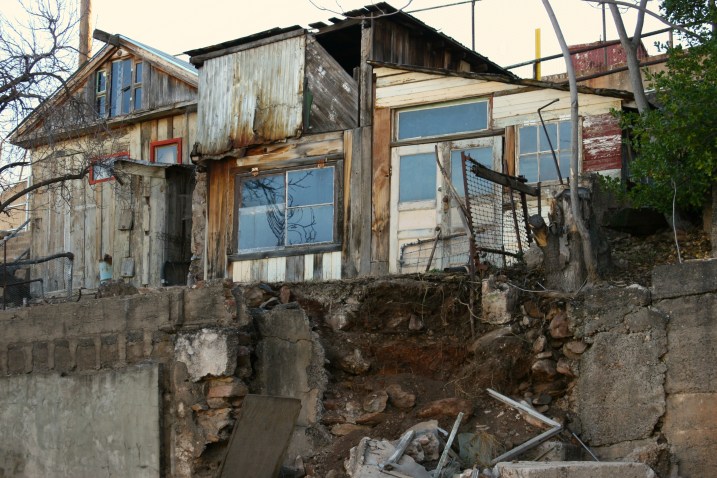
An abandoned home rest precariously on sketchy footing
** Although not for lack of trying. For example – in 1930, following an underground blast, one jail’s foundation failed, allowing it to slide 225 feet down the mountainside. Later – in true bad-ass spirit – a bulldozer drug it from the middle of the street to where it sits today, safely away from potential traffic harm.
Jan 1
On Sunday Kelly and I traveled about 90 miles north of Sun City West to the town of Cottonwood and set-up shop in Dead Horse Ranch State Park. Wanting to visit a number of locations in this general area, DHRSP seemed like an ideal, centrally situated location to base ourselves before moving 5 hours(ish) southwest to California’s Joshua Tree National Park.
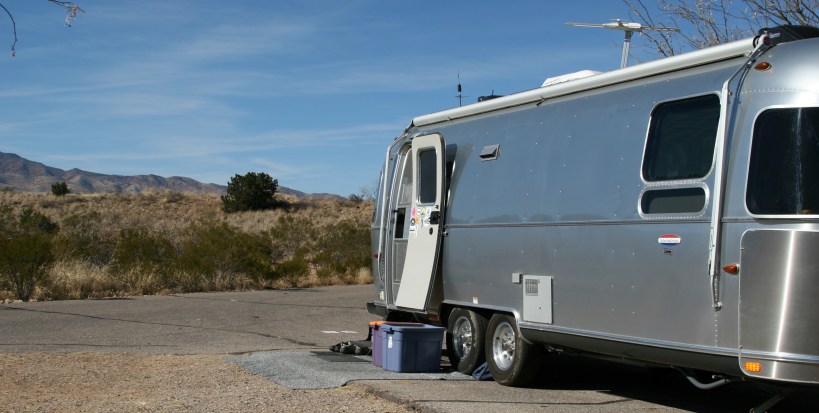
Our spot in Dead Horse State Park
Unlike the weather my family and friends in Minnesota, Wisconsin, & Illinois have been experiencing the past few days, Mother Nature has not waved her miserable wrath-of-winter wand anywhere here in the high desert. Under brilliantly blues skies, daytime temperatures flutter into the low 60’s before giving way to cooler 30’s at night. Factor in virtually zero wind – the “feels like” effect has resulted in my donning t-shirts, shorts, sunglasses, and plenty of sunscreen while enjoying delightfully blissful conditions.
For those of you freezing-off your tushes elsewhere, you’ll need to trust me that these conditions are quite enjoyable. Too bad for all of you.
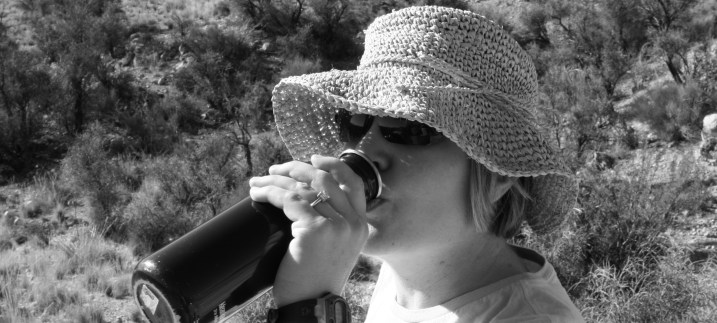
Kelly taking a refreshing reprieve from the heat
DHRSP is big, offers loads of multi-use (dog friendly) trails, spacious sites, and surprisingly clean bathrooms/showers. The park offers water and electric, but not sewer. Consequently we must display conservative water disposal into our holding tanks when not secretly “watering” the bushes outside our door.
Less the absence of sewer, the situation here is so nice, we cancelled our plans to visit Joshua Tree and we will be staying put through Saturday.
So what makes this place so nice you’re wondering … many things actually. The park is mostly empty which affords us plenty of elbow room, we’ve fallen smitten for the hipster cool town of Sedona located just up the road, and we have blazing fast mobile broadband directing the internet into our laptops … enabling us to work remotely Thursday and Friday.
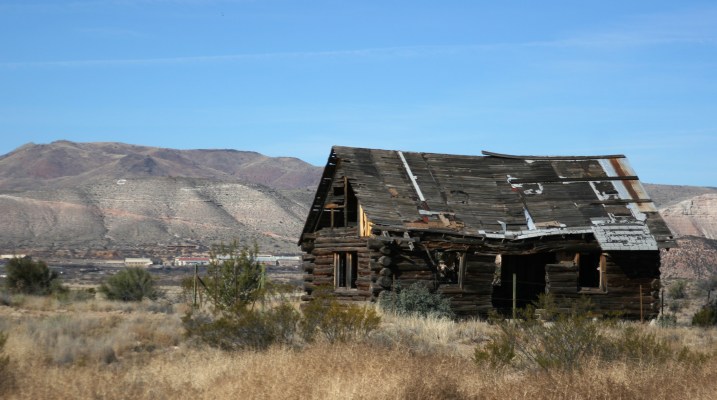
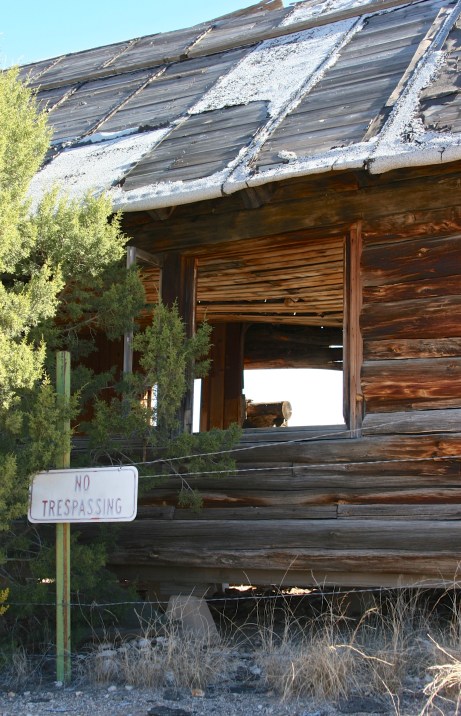
I’ve added a few snapshots from the past few days below.

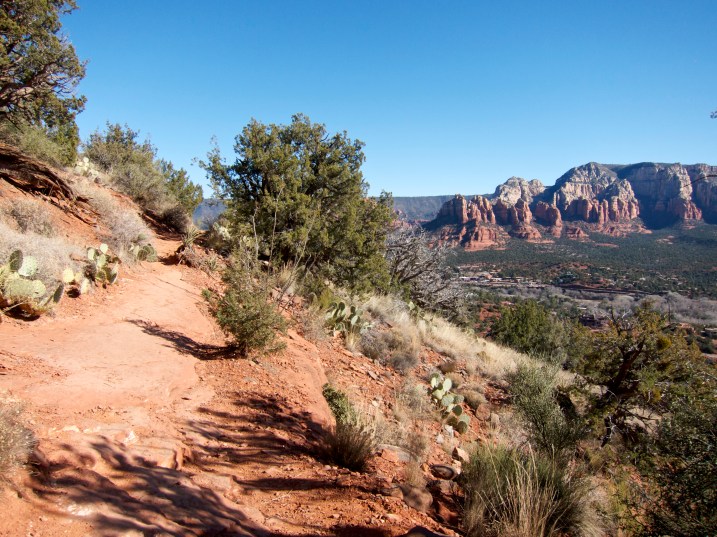
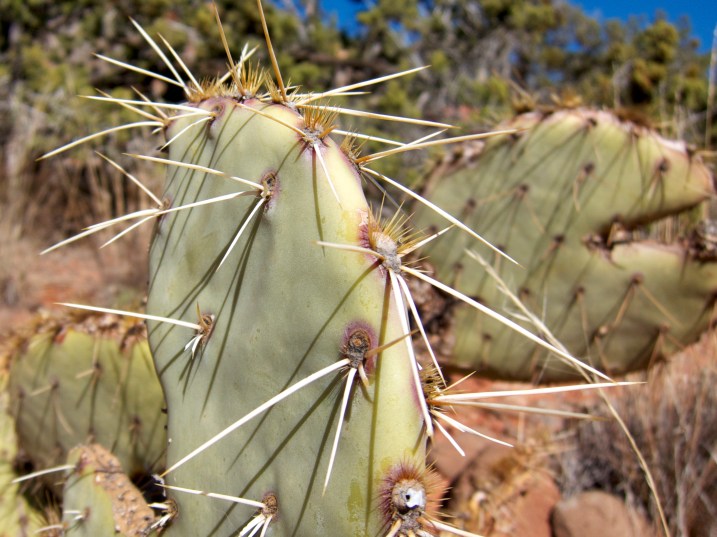

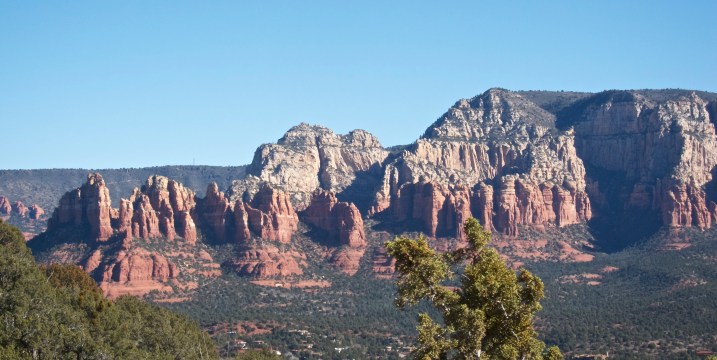


As mentioned in my last post, Kelly and I left Tucson on Christmas morning and drove to Sun City West – home of Kelly’s father and his wife (Sandy). Sun City West is an interesting place – something straight from the stereotypical pages flipping through your imagination. There are lots of golf courses, a seemingly infinite number of retired people (some really old), and a shocking abundance of medical care facilities.
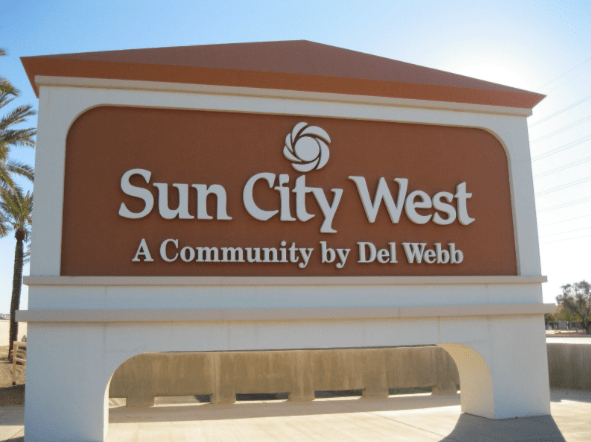
More, for the person preferring to run errands while driving a golf-cart in lieu of an automobile, this place is fit for purpose.
The locals refer to this township as “SCW” and I always enjoy visiting this area. Something about all these retirees racing around in gasoline powered golf carts with lap dog driving shotgun makes me smile. I’d guess that at any given moment I am the only mixed race, socially liberal Democrat within the city limits, but despite that nuance, I find a peacefulness to the area. From what I can tell, people here seem to fall into two camps – a happily retired and pleasantly carefree person, or a curmudgeonly bastard … likely pissed-off at somebody for no sensible reason.
I get a kick out of both scenarios which affords me plenty of humor all around. BTW, if you’re wondering – Gene and Sandy fall into the happily retired and pleasantly carefree camp. They love it here.
(True story … one morning at the senior center fitness room, I witnessed two locals nearly break into a fist-fight because one guy was mad at the other for allegedly scaring the dog he brought into the gym. Literally, two grumpy old men cussing like sailors and daring the others to keep talking trash. It was awesome to witness. Displaying a knack to multi-task, I was impressed that the guy with the dog didn’t once break stride atop the recumbent bicycle he was riding.)
Gene and Sandy are great hosts and visiting their home is always easy. We abandon our trailer and stay with them in their home, which is spacious and comfortable. As an added bonus, Lilly has access to a big backyard wherein she can run freely.
Fortunately, the streets in SCW are wide and barren – a combination which easily accommodates our home for a few days.
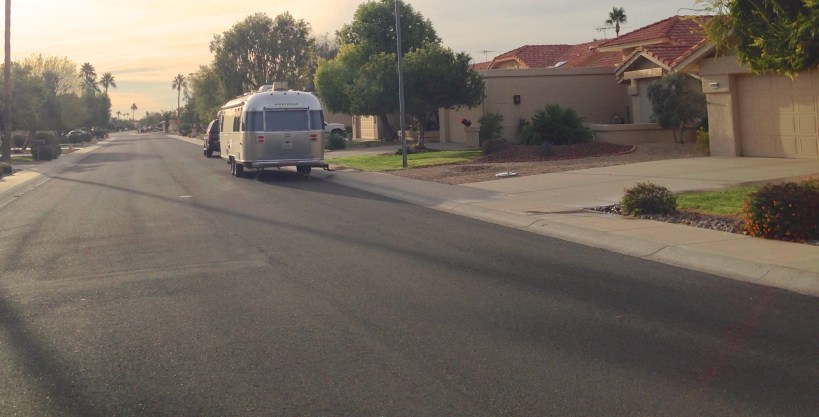
Mabel rests quietly on Marble Drive.
Once upon a time, spending time in a home like this was no big deal, but now these periods of Airstream abandonment seem oddly foreign. At roughly 1800 sqft, their home is not huge by our societal standards, but compared to our 188 sqft home, theirs seems huge and grandiose to what we are used to. To be honest, retreating back to the familiar cocoon is strangely comforting.
Another benefit of arriving to SCW was my rendezvous with the holiday gift package my mom sent us. Complete with traditional family foodie items and other gifts, the care package landed at Gene and Sandy’s prior to our arrival and I was happy to have a bit of Christmas tradition, albeit 1,600 miles away from my immediate family and frigid upper Midwest temperatures.
Regrettably, I didn’t capture many fun pictures during our stay, but like our stay in Tucson, these few days in SCW were fantastic. Gene and Sandy are fabulous hosts and before we knew it, Sunday morning arrived and we began our trip north to Sedona.

 Wandering With Purpose